

By Imteyaz Rahmani,
Elimination of British rule from India and independence of the country are great events of human history which not only abolished British kingdom but also left indelible mark on constitutional and political history of Arab world. The British were ruling in their own way on Arab countries due to their rule in India and almost the whole world was under their control as a super power.
As British rule weakened in India, its position in the world also changed. But to make India free what was required was courage to stand before a giant empire and to sacrifice anything wherever needed. This was not possible without extraordinary will power.
These virtues were found in Ulema of that time. They were determined to remove foreign rule from the country and so laid a foundation of freedom struggle. Almost 19,000 Muslim Ulema sacrificed their lives for freedom of the country. Finally these sacrifices bore fruit when India became free from British rule in 1947.
Indian common Muslims also played a pivotal role in freedom struggle along with Ulema. When Non-Cooperation Movement was started in 1932 and British started to arrest enthusiastic revolutionaries then, history tells, 82, 000 people were arrested from across the country out of which 42, 000 were Muslims. This figure shows that Muslims sacrificed their lives more than any other community in the freedom struggle in 1932 despite being in minority.
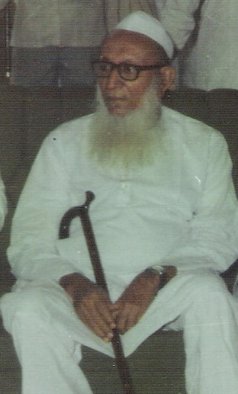
Maulana Minnatullah Rahmani was involved with full enthusiasm in the freedom struggle. He inspired lovers of complete freedom with his service and contribution in the freedom struggle. He worked for freedom in a well planned way and was among thousands who were sent to jail at that time. He was sent to jail twice and embraced all difficulties for freedom of the country and remained the part of caravan of freedom with determination and courage.
The incident of his imprisonment left a deep impression on Khanqah Rahmani and the atmosphere inside it became hostile against the British rule. After this incident Khanqah Rahmani got involved directly in the freedom struggle which continued till 1947. This is not so that revolutionaries were unaware of the importance of the Khanqah or did not feel its public support.
The influence of services and spirituality of Qutub-e-Alam Maulana Mohammad Ali Mungeri could be felt not only in the country but also from Burma to Africa. Mahatma Gandhi visited Khanqah twice in Maulana’s life. He put his chappals at the gate of Khanqah and came near Maulana with folded hands in his respect. Many leaders of that time visited Khanqah and showed the same respect.
Arrival of different leaders of freedom struggle at Khanqah Rahmani went on increasing as a result of struggle of Amir-e-Shariat Maulana Minnatullah Rahmani for freedom and this Khanqah became their safe place to hide themselves from brutal English rulers.
Gandhiji, Khan Abdul Ghaffar Khan, Pundit Jawahar Lal Nehru stayed in Khanqah in 1934 which witnessed a devastating earthquake in Munger’s history. Khan stayed there and helped earthquake victims besides freedom struggle. Kahn Abdul Ghaffar Khan spent 15 days there.
Hazrat Amir-e-Shariat took part in the freedom struggle from Jamiat Ulama-i-Hind’s platform. He contested first general election, held in 1936, on Muslim Independence Party’s ticket and won with record votes. He made himself aloof from parliamentary politics in 1940 and never contested any election again. After independence, when first Chief Minister of Bihar Sri Krishna Singh requested Amir-e-Shariat to accept membership of Rajya Sabha, as per wish of Pundit Jawaharlal Nehru, he refused politely saying that he had already announced in 1940 that he would never take part in parliamentary politics.
Isolation from parliamentary politics did not mean that he also left struggle for freedom of the country. On contrary, he continued to take part in the struggle with the same spirit with all his followers. Khanqah Rahmani was the main centre of publication of all confidential circulars, posters and pamphlets which were distributed among freedom fighters in major part of Bihar at that time.
Hakeem Moinuddin, Mr Ugra Mohan Jha (who later retired as Superintendent of Police) and Mr Chandra Shubhkar (later became the Chief Minister of Bihar and minister in central government) were among his prominent companions in the freedom struggle.
Slide show
During ‘Quit India Movement’ the British government issued a search warrant against Khanqah Rahmani which was searched twice for 13 hours. Its entire building and nearby fields were searched but no pamphlets or handbills were found by the officers while these materials were there in good number.
Great freedom fighter and the first Chief Minister of Bihar Sri Krishna Singh hid himself for 15 days in the Khanqah during freedom movement of 1942 when British started arresting of revolutionaries.
Hazrat Amir-e-Shariat delivered unforgettable speech on Urdu language and literature in Bihar assembly. Its extracts are also available in government records.
Hazrat Amir-e-Shariat Maulana Minnatullah Rahmani started ‘Al-Helal Weekly’ with contribution of his followers in 1937. This was a very strong weapon against British at that time and was very popular in Urdu knowing community.
These events show extraordinary participation of Indian Muslims in the freedom struggle which has been completely forgotten these days.
(Author is Media Advisor, Khanqah Rahmani, Munger, Bihar. Adapted from his speech in Urdu by Tarique Anwar for TwoCircles.net. Speech was delivered during the three-day seminar (May 3-5) held in Munger, Bihar on ‘Role of Bihar and Bengal in Independence War and the Contribution of Urdu Language and Literature’. Maulana Minnatullah Rahmani’s son Wali Rahmani is the current Chairman of Rahmani Foundation, Sajjada Nasheen of Khanqah Rahmania and Secretary of All India Muslim Personal Law Board.)