

Naila Alavi
March 20, 2020 Friday, 5:00 AM – “Today, justice has been done after seven years.”
These are the words of a mother longing for justice; these are the words of every woman of the country.
Who are we?
WOMEN!!!
We are supposed to dress modestly while going out, we are supposed not to stay out late, we keep looking over our shoulders at all times, we drive with our doors locked and windows rolled up.
When I call myself a woman from a different land, I don’t mean it geographically. Just, at a tender age of 20, I already find myself full of discontentment, wrought with unanswered questions, unheard doubts. I’m often told to shut up, lower my voice, ground my opinions and to take it easy. Not only men, but also women have told me multiple times to curb my urge to understand every social norm that a woman of this society is chained to. Enough ink has flowed over the quarrel about women yet it is still being talked about.
This morning of March 20 brought a smile on my face when a notification popped on my phone screen.
“Ah, finally”… were the only words I uttered.
In no less than a few seconds amidst my sigh, a voice began lingering in my futile brain – “Now what?”
The voice grew louder as questions started flooding:
Is capital Punishment the remedy we need? Are women of this country now safer than they were on the biting winter evening of 16th December 2012? Will I be now allowed by my ever scared mother to roam around after sunset?
As a woman, it is difficult to forget the horrors of 16th December 2012 when a group of men in South Delhi’s Munirka gang-raped and fatally assaulted a 23-year-old physiotherapy intern, Jyoti Singh. Jyoti was beaten, gang raped, and tortured in a moving bus that she had boarded with her friend, Awindra Pratap Pandey. There were six others in the bus, including the driver, all of whom raped her and injured her friend. Eleven days after the assault, she was transferred to a hospital in Singapore for emergency treatment, but succumbed to the injuries two days later.
The incident produced boundless national and international uproar leading to the immediate arrest of the accused on charges of sexual assault and murder.
While courts convicted the six men, one of them who was a juvenile at the time was released in 2015 after serving three years in a reform facility (I hate to break this to you that this boy is roaming free maybe looking to satisfy his greed again). Another committed suicide inside the jail.
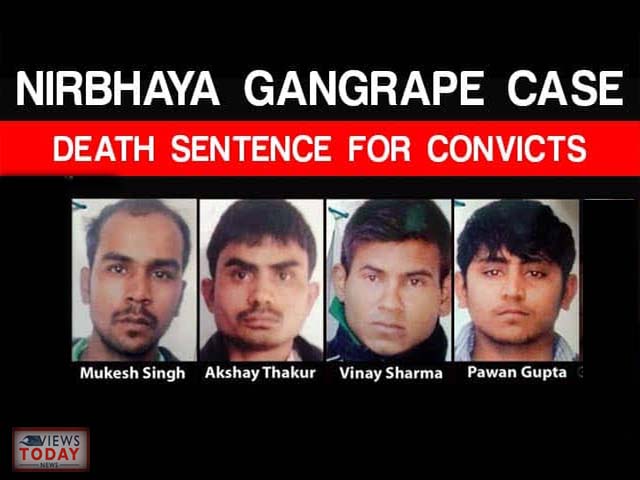
In the last few months, all four men filed petitions in the Supreme Court in a bid to reduce their sentences to life imprisonment. But the top court rejected their petitions, leaving the men with no other legal recourse. A last minute appeal to have the death penalties commuted in the Supreme Court was also rejected hours before the executions were carried out.
What followed the early morning executions were festivities with loud chants of “Death to Rapists”.
I, a woman, am still waiting for an answer though.
Will the executions make women any more secure in India?
A short response to that question would be: No.
Also, that’s on the grounds that in spite of the expanded investigation of wrongdoings against women since December 2012, comparable brutal episodes have kept on standing out as truly newsworthy in India. Some unluckily haven’t even made it to headlines due to deeper rooted lackadaisical approach of those in power to conveniently bury names associated with particular classes and castes, speaking on point.
As indicated by government information, incidents of rapes have been ascending throughout the years. Recently-released figures from the National Crime Records Bureau show police registered 33,977 cases of rape in 2018 – that’s an average of 93 every day. In 2017, Indian courts disposed of only about 18,300 cases related to rape, leaving more than 127,800 cases pending at the end of 2017 (https://www.reuters.com/article/us-india-rape-factbox/statistics-on-rape-in-india-and-some-well-known-cases-idUSKBN1YA0UV).
I for one, know women who have never announced being ambushed in light of the fact that they are embarrassed, or in view of the shame related with sexual wrongdoings, or on the grounds that they are anxious about the possibility that that they won’t be accepted.
Nevertheless, dailies are brimming with horrendous reports of infringement and it appears to me that nobody is safe – the victim could be an eight-month-old or a septuagenarian, she could be rich or poor or white collar class, ‘covered’ or not, an attack could happen in a town or an enormous city, in the classroom or her own home. Sexual predators are all over the place – sneaking in homes, play areas, schools and the roads – sitting tight for a chance to strike.
In November last year, a 27-year-old vet was raped and killed in Hyderabad and her body was later recovered, suffering major burns. A few days later, in Unnao district in UP, a woman was set on fire while she was on her way to testify against her alleged rapists. Another woman, also in Unnao, was seriously injured in a car crash in July after she accused a ruling party lawmaker of rape. Two of her aunts were killed in the crash, and her lawyer was seriously injured.
All these cases, other than revealing the brutality of the abuse also disclose the entitlement enjoyed by men in power. Women rights activists also allege that rape cases are not reported appropriately. “Police, politicians, judges, and campus administrators in India tend to understand sexual violence as a loss of “honour” rather than as the violation of consent,” said Kavita Krishnan to IndiaToday (https://www.indiatoday.in/diu/story/sexual-violence-pandemic-india-rape-cases-doubled-seventeen-years-1628143-2019-12-13). She added that this kind of attitude towards victims allows consensual inter-caste or inter-faith relationships to be conflated with ‘rape’, and as a result, ‘honour’ crimes and patriarchal restrictions hide in plain sight, disguised as ‘protecting women from rape.
In addition, the victim has to face mortifying inquiries like — ”What were you doing there at that late in the night? For what reason did you get there at such a time? (as though going out at a desolate spot in the night gives somebody the right to rape her)? Who was that individual who was going with you? It is safe to say that he is your boyfriend?”
Hiding behind such questions is the poisonous mentality of the social milieu we live in that can only think that a piece of cloth determines the character of a woman. Also hidden is the one sided vengeance against weaker sections that our ‘tough laws’ serve. Worse, the police sometimes press for compromise in a rape case by suggesting that the accused is ready to marry the rape victim…even though the crime is non-compoundable as per law.
Some say strict punishment, swiftly delivered, will instill a fear of the law in the public mind and deter rapes but in my opinion this will do no good.
Death penalty is not effective at reducing crime (https://thewire.in/women/rape-death-penalty). The long-term solution lies in bringing an attitudinal change towards women through education and concerted efforts at gender sensitization.
There are crimes that deserve death, and indeed there are crimes that deserve a death at least as painful as the victim of the crime suffered but if we must choose between life imprisonment and death penalty, then, I would suggest certain modifications of the latter, apart from the obligatory examination of whether it is applied fairly and accurately (which, by all evidence, it is not).
(Naila Alavi is an undergraduate student of English Literature and History at Aligarh Muslim University)