

By Wasim Ahmad
How we look at things is extremely important. In a discussion about our established institutions like the age-old habits there is bound to be sharp difference of opinions. There will always be two ways to react – emotionally and reasonably. Among the established institutions, madrasaas are a case in point. There cannot be a debate about the fundamentals of Islam. But an institution established for the various needs of a society will and should always be under the purview of debate and also drastic changes – if the need be. We are not ready for it. We mix a lot of issues when we debate a topic and overlook many others.
We will criticize the Western education – and deservedly so – vehemently and will stop there. We will agree that it makes one selfish and creates workers or clerks for a certain system. But will not take it further. Further with a view to take the best from it and supplement it with what is missing in it. We have a threat perception about almost everything. All our things are under constant danger – all the time. We will really be in a very bad shape without these looming dangers. As otherwise there will be nothing to complain about. We find avenues to pity ourselves and search for emotive issues. We search for the headlines that we love to read.
Duality of knowledge
The separation between deen and duniya is so deep that those who seemingly don’t believe in it and apparently understand the all-permeating spirit of Islam they, too, keep dividing the two. When I hear of deeni rahnumaa’ee, I wonder what we mean by it. We are motivated to lead the world without understanding it first. We are motivated to guide the humanity without speaking its language. And we don’t see the anomaly. We want to groom leaders for the world. And we disregard the laws of nature. We are waiting for our important tasks to be performed somehow miraculously. We want to heal the patient without the slightest pain. We defy the laws of nature and despise the West that utilizes the laws of nature for its benefit. We have a right to curse the entire world but who will guide the world with the right kind of qualifications?
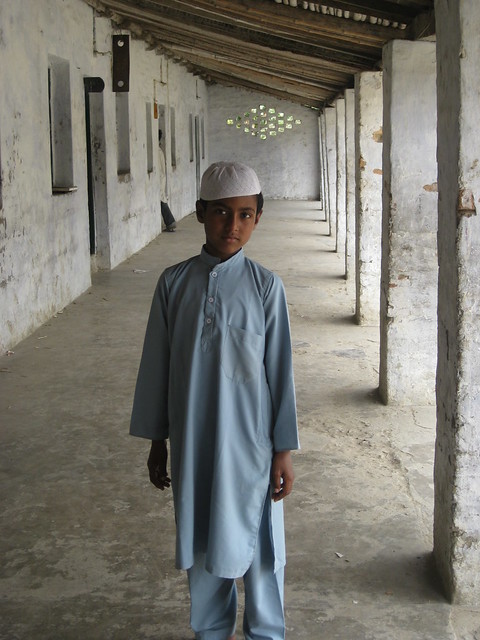
A madrasa student in Bihar [TCN Photo]
It is not enough to see a madrasah graduate as a university teacher or as a professional worker in an industry etc. We need to get more than that. We need to get the wealth of ideas. We need to get the topmost people from among Muslims in all walks of life. We are not going anywhere despite those few who are earning a decent living. Here the focus is on civilizational goals. At some point of time we will have to do away with the duality of knowledge. As there seems to be a growing realization among the community members. If we incorporate all the subjects and disciplines what we will call those institutions? It is not about the name as it is about the attitude and the way we look at things. The combining of the two streams is a must, however. Which of the two is more in line with our civilizational goals will, however, help in this regard.
There is a question “How two completely different Ideologies can exist side by side?” These are NOT two different ideologies. The Islamic concept of knowledge is extremely vast. Everything in this universe, in the man himself and the history is a source of knowledge, according to Qur’an. You name a discipline and it will certainly fall under the purview of Qur’anic sources of knowledge (Fussilat, 41: 53 and Ibraaheem, 14: 5). This one point we have to understand very well. Only then we will be able to do away with the duality of knowledge and our modern educated will come out of the self-doubt. Only then we will realize that we do need to merge and integrate. “Madrasaas are preserving religion” denotes a mistaken notion. It indicates that Islam is weak and it requires to be safeguarded. Is it really the case? I would reiterate here that Islam is not weak. The Muslims could be. And they actually are. Because they have forsaken the Faith. They have not understood it in its entirety. The very madrasaas which they are seeking to protect and perpetuate have taught an incomplete Islam.
The graduates of madrasaas who have joined the mainstream life (mostly after additional years of studies and with added qualifications) haven’t done the real job i.e. abolishing the dichotomy of knowledge and dispelling the myth of ‘secular’ and religious’ knowledge if they studied Islam very well. Those who have studied Qur’an and Islam for long years they should be in the forefront of the life – as a whole. They should take us further towards the achievement of our civilizational goals. Again, we are missing out on the holistic understanding of Islam and the fact that studying the same Book the Muslims contributed hugely to the world. We normally notice what is happening and do not try to see what should have happened and it hasn’t. Please enlighten us as to which way we can take to the path of progress and discharge our responsibilities as the “best Ummah” (Aal ‘Imran, 3: 110).
Because of the 3-4% Muslims who go to madrasaas, the 96% have a self-doubt. They have delegated all those tasks to that minority which was their duty, too. In Islam it is the individual business. Qur’an clearly says that no “bearer of burdens can bear the burden of another” (al-An‘aam, 6: 164). The ultimate responsibility is that of the individual who is actually the focus. Again we have missed out on this aspect which is against the teachings of Qur’an because it holds the individuals responsible (5: 105, 19:80, 19:95 and 6: 94). My observation is that we are very good at passing the buck. We are masters in this art and are savouring it to the maximum.
My question is why we find only a “little deen”? Why not all the aspects of our life are permeated with the brilliance of this deen. Why despite the presence of thousands of ‘Ulama we have only “little deen”? Shouldn’t we, precisely for the same reason, analyze it a bit more? What is the problem in having more of that deen in all the walks of our life – for our benefit and for the benefit of others?
Priorities
Qur’an does not ask in a single verse to memorize the Qur’an. (Yes, it is important, undoubtedly.) But it obligates thinking and reflection upon it in hundreds of verses. What has happened to our sense of priorities? Where are we heading to? What are we focusing upon? Oblivious of the fact that:
hur halaak-e ummat-e pesheeN ke bood ■ zaaN ke bur sundal gumaaN kardund ‘uood
(Each past nation that ever perished, it perished; Because it ‘misjudged the priorities’.)
(Maulana Rûm)
We are not here to “fortify ourselves”. We are brought up for the entire humanity (Aal ‘Imraan, 3: 110) and guide it towards the Straight Path. We want to “fortify ourselves” and forget the rest! That, too, with a sense of insecurity and threat perception? Why are we threatened (al-A‘raaf, 7: 175-176) we do not analyze the reasons of that and do not plan to rectify the situation.
I would have believed that Qur’an is taught in our madrasaas if we had seen the results. The Book being taught over and over again for so many years should have changed the entire scenario and the Muslims would have truly become the leaders. If they haven’t, then there is something seriously wrong with the way it is taught. We need to consider the fact that the letters (Arabic alphabet) were already there. The words were also there. Qur’an has not used any new alphabet and any new words which were not known to the Arabic knowing people. What is divine about the Book, then? It is the way He has put all of it together – in verses, Soorahs and in the entire Qur’an. There is a problem in our exposition of the teachings and the focus of the Book. The collective spirit of the Book is not taught in our madrasaas. The problem is in our atomistic thinking – as opposed to holistic approach.
There is a problem in the way we approach this Book. We break it into bits and pieces. Its cumulative focus escapes us. Hence, while we do watch the individual slabs of marble we still miss the Taj Mahal. Looking at the entire Book is a difficult task. Our rising from downfall is not easy either. Regaining the lost glory is more difficult than gaining it the first time. This partial outlook is what we need to abolish. What we have done to the Book of Allah is reflected in all aspects of our life. No aspect of our collective life is worth emulating by anyone. We don’t serve as a role model for any people on earth. Muslims are not being appreciated for anything in the world. It is despite the fact that we are teaching Qur’an!
Many have suggested that we need to integrate the teaching of Qur’an and Islam in the curriculum. I am with them. Its modalities need to be worked out. Our real “collective failure” is in not being able to remove the poverty of ideas. We are not short of material resources. We have a shortage of ideas (iflaas-e-takhayyul). With a head on our shoulders we should never complain about the paucity of resources.
We should shift the focus from Urdu to Arabic. This is in addition to the local and national languages. I am not sure what will it mean for Urdu in future but Arabic will take us closer to our vision. I assume so. We need a combination of Arabic and English. At the moment both the languages are mostly treated as mutually exclusive.
Education
We divorce ta‘leem from tarbiyah because of the wrong notion of ta‘leem, which we take only as a means for collecting degrees. If tarbiyah is important (and of course it is) why should we deprive the huge majority of our students from it? In fact, both – ta‘leem and tarbiyah – are inseparable part of each other. Education is not for degrees and not for jobs. It is for life. Degrees and jobs should come as a by-product.
I fully agree that “You and I are just as obligated to learn Qur’an, Hadith and Fiqh as the students in madrasah. Our great scientists …………… excelled in science, medicine, maths, geography, engineering and other fields”. Hence, we need to “integrate it with other compulsory subjects. That’s what we should think of doing, if we see the importance.” Also, as argued earlier we should not have educational institutions exclusively for Muslim children if we aim at their (our) integration in the larger society.
The Prophet (pbuh) did not divide deen from duniya and deeni from dunyaawi. We need to go back to his message and mission and look at the life in its entirety. The responsibilities which we entrusted to madrasaas we ALL should carry them out. Madrasaas have become an excuse for delegating many tasks which all of us were obligated to carry out.
I often come across the observation that we do not pay much to the instructors of Qur’an or a Qaaree or ‘Aalim. I would like to ask here why don’t we pay less to an IT professional and an MBA? Or the graduates and professionals of any other discipline, as an example? Let us spare some time and think about it as it requires serious consideration. I would submit that it is about indispensability. Apparently nobody is indispensable. But at the same time we are forced to pay more to those who have better skill-sets and who are somehow ‘indispensable’. We normally do not relate. Let us not forget the fact that the example from Sahaabah (companions of the Prophet) and the earlier generations have one very significant point which we often miss out. They were in no way less qualified with their peers in the society in any respect. Their tools and skills were not lower in terms of its currency than those of the rest of the people. Moreover, Islam had given them an advantage over the rest. Did they fight with inferior weapons whenever they had to fight, for instance? The answer to this question will clarify many things. Our “fighters” come to the “battlefield” with the “weapons” of some past centuries. And then we complain that they are out of the race today. And we want them to be rated at par with the rest. We cannot change the laws of nature. Though this is precisely we are trying to.
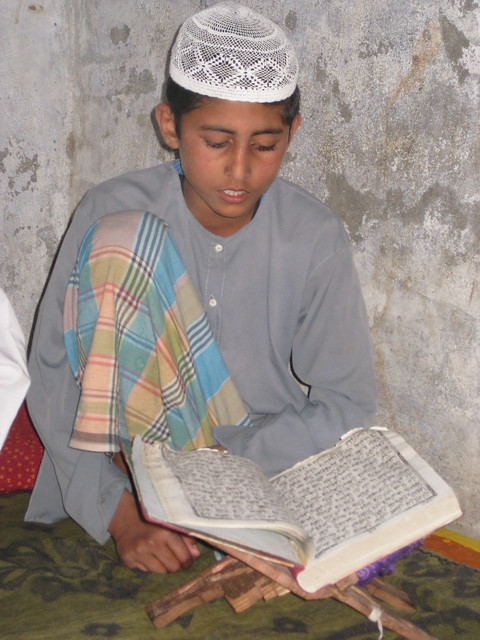
Memorizing Quran in a madrasa in Bihar [TCN Photo]
“Why don’t you teach in a madrasah” is a question that has been asked. I can teach in a madrasah. Why not? But I don’t want to do that as the only option for me. I should not be teaching in a madrasah because I am not of much use to the society. Because I have least chances of employability (usefulness) elsewhere. However, in the given situation if I go to teach in a madrasah I will run into problems every now and then. I am not listened to objectively and dispassionately in the community of highly educated and supposedly more exposed and tolerant people. How will any different opinions be tolerated in a relatively closer environment?
The above submission is besides all other considerations. The considerations which our modern-educated want to enjoy to the full and think that the ‘traditionally educated’ should make all the sacrifices. The ‘modern educated’ would like to have the best of both the worlds but the ‘traditionally educated’ deserve the best only in the Next. And in order to perpetuate the same system they will use the best arguments and evidences. I am not sure if it is a double-standard. If it is not, I don’t know what else it is.
“You have benefited from madrasah” means I have lost all my rights to say what I consider to be right. It means the Book I should leave behind. It means that I should only know about the Prophet (pbuh) but should not learn anything from his methodology. “Establish a madrasah” means do not speak. We will not listen to you unless you “do” something. It means “Leave me alone and let me take rest till the time you “do” something. Such suggestions indicate a very serious problem. They indicate that we are still separating idea from action. Removing this notion is one of the challenges that we have.
Please do not assume that the madrasaas are existing on the grounds. Madrasaas exist in the minds first. And only after that we see them on the ground. We see buildings all around us. These buildings are only the replicas of the original buildings which existed in the minds of their designers and makers first. In the same manner we have to build the integrated education system in the minds first. Only then we will see the replicas on the ground.
Every child is an “irreparable giant”. Everybody is unique. The purpose of education is to give full expression to that uniqueness in everyone which nobody else has. The purpose of education is to help a child realize one of his potentialities to the maximum. Only then we will get excellence. How much we are focusing on this significant aspect of education is worth considering.
When we will not get even Imams we will still be getting something from our madrasaas and we know that ‘something is better than nothing’. This is fine. But the question is what we want. Is this what we want? Do we want an Imam in the sense that we are used to or we want those who could lead the world in every single walk of life? If we want our graduates to lead the world – keeping our civilizational goals in view – then we will have to analyze the things more dispassionately. If we don’t want that then our educational institutions are carrying out a “wonderful job”. The choice is ours.
Yes, I am for a wide range of subjects as well as including the children of other faiths. What we call that seat of learning is not a big issue. It is not in the names as it is in the contents. However, please do not let the two streams run side by side. The very existence and perpetuation of the two separate streams will denote and reinforce the duality. It will continue to strengthen the divide in the minds about the knowledge. Our future generations will grow up taking it quite natural and justified. Just as we do. Just as we did.
There is something lacking in both the streams. Why don’t we think of making the two one – and benefiting from both at the same time? The institutions established for imparting knowledge are human arrangements. What is obligatory is seeking and creating knowledge. The four walls and the names given to these institutions are not that important. The ultimate objectives are.
If Aakhirah is important then by the same logic duniya is very important, too. It is so important that the entire career in the Hereafter depends on this ordinary and mundane world. On this Temporary, rests the fate of the Permanent. This is exactly why the life on earth is extremely significant and it should be lived to its fullest contributing to the maximum and making this world a better place to live in every sense. We should do our best to turn it into a “veritable Paradise” otherwise it will be difficult to prove that we are interested in Paradise. If the Almighty will ask that I gave you a world as the place of action and you did not do much to turn into “Paradise” what hope will we have for a Paradise in the Hereafter? Remember why do we forgive the people? We forgive the people because we want to be forgiven by Allah. If we never forgive anyone it means we are not interested in the business of forgiveness. If we are not, why should Allah then forgive us?
Helping the poor and the needy is the responsibility not just of the madrassas but of everybody and all educational institutions. Aren’t we passing the buck here – again?
Muslims don’t have to merely survive “being Muslims because of these madrasaas”. They should thrive in this world – instead. They should lead it. They should make it a better place to live in. They should master all the sciences of the world and become founders of many more. Their recognition is not merely by appearance. The real recognition is by the contribution which they make to the society and the civilization – irrespective of East or West.
If “religion has nothing to do with market” it shows the failure of madrasaas in providing the holistic concept of Islam wherein business occupies a significant position. Business transaction (which does happen in markets) is an important component of Fiqh (al-Mu‘aamalaat). The exposition of Islam is very much flawed. This is why we run into self-contradictory situations – very often. This we will continue to do as long as we keep the deep divide of deen and duniya alive. Islam does not need to be saved in “its original form” as much as the Muslims need to be saved. We have a deep feeling in our hearts that Islam is a weak religion. Islam is not a weak religion. Muslims may be a weak people because they have left (the complete) Islam behind. If they had not, they would have been in the forefront of every aspect of human life and would be leading the humanity by their good examples.
We have to remove the dichotomy of knowledge (deeni and dunyaawi) and the division between deen and duniya. This is the ultimate objective. Nothing else is.
—
Dr. Wasim Ahmad is the Department Head of Islamic Studies at Preston University Ajman in UAE.