

By Mumtaz Alam Falahi, TwoCircles.net,
It is Gali No. 9 that starts along the Jama Masjid of Zakir Nagar, a thickly populated locality in Delhi’s one of the biggest Muslim ghettoes, Jamia Nagar. I entered the gali first time since I entered the national capital three years ago. I had got the reaction of Muslim leaders to the Delhi High Court tribunal order acquitting Students Islamic Movement of India (SIMI) of all terrorism charges and quashing the ban it had been carrying for eight years.
Now I wanted to gauge the public mood of Zakir Nagar area, particularly the gali where stands, now crumbling in fact, the two-storey office of the “terrorist organization” SIMI. I put the qualifier in quotation mark deliberately. For, when a learned judge does not find any evidence to declare SIMI a terrorist outfit, why should I, or anyone else for that matter, give it the tag?
A couple of hours before I reached the area the Supreme Court had stayed the ban lifting order of the Delhi HC tribunal.
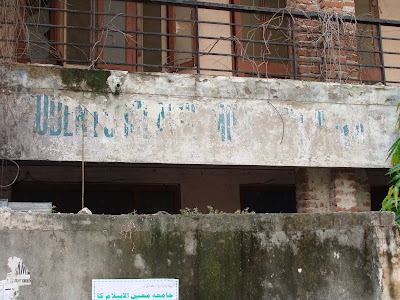
Now abandoned headquarters of SIMI
The rest of Zakir Nagar was hustling-bustling with single straight road packed with people and shops with goods on either side. It showed that ban or no ban on SIMI, the local people were unmoved, rather indifferent.
But the lane which has SIMI address was rather silent. Maybe it’s normal or had some effect of the Supreme Court stay order given some hours back.
The eight-feet wide gali has a row of houses on either side, one or two shops in between. Very few people are seen on this narrow road. When I was walking on the road to the SIMI office, I was walking down the memory lane, not mine, but of the most active Muslim youth organization founded in early 1970s in Aligarh. From this gali had developed the organization from a small into a big one, with presence in major parts of the country. But the present was very different.
The first person I met on the road of Gali No. 9 was a 20-odd youth. I asked him about SIMI address. First he smiled and then politely said, “No, I don’t know.” It was clear he knew but he didn’t want to, or gather courage to tell. Next was a maulvi figure person in his mid-thirties. He also gave me disappointment but he indicated to a shopkeeper and told me he must tell you. How was he so sure that the shopkeeper has the answer of my question? Simply because he lived in that gali, knew the shopkeeper, and definitely knew the SIMI office also.
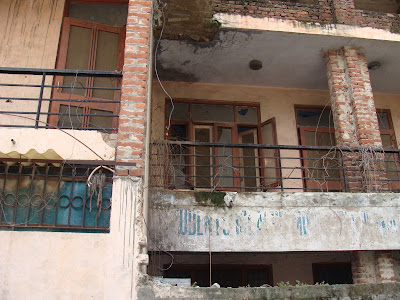
The shopkeeper pointed towards a two-storey deserted building, almost 50 metres away from his shop. To get sure that I was at the right place, lastly I asked another maulvi looking person in his shop, exactly in front of the SIMI building. He nodded. While many other SIMI neighbours have washed off their hands, this maulvi, a washerman professionally, had no excuse.
The picture in this story will tell you everything about the condition of the building.
What surprised me more was the contrasting attitude of Muslim leaders and Muslim masses towards the youthful now imprisoned organization.
In fact all leaders I talked to had SIMI-lar views, welcoming the Delhi High Court tribunal order and condemning the efforts by government and intelligence agencies to tarnish the image of Muslims and Muslim organizations like SIMI. I talked to Jamaat-e-Islami Hind secretary Ejaz Ahmed Aslam, All India Majlis-e-Mushawarat president Dr Zafarul Islam Khan and All India Muslim Personal Law Board leader Dr Qasim Rasool Ilyas.
But the masses appeared virtually indifferent. Why? I have no answer.