

Nikhat Fatima, TwoCircles.net
On August 10th, the Delhi Development Authority (DDA), on the orders of Supreme Court, demolished a Sant Guru Ravidas temple in Tughlakabad on the grounds that the land belonged to the Government.
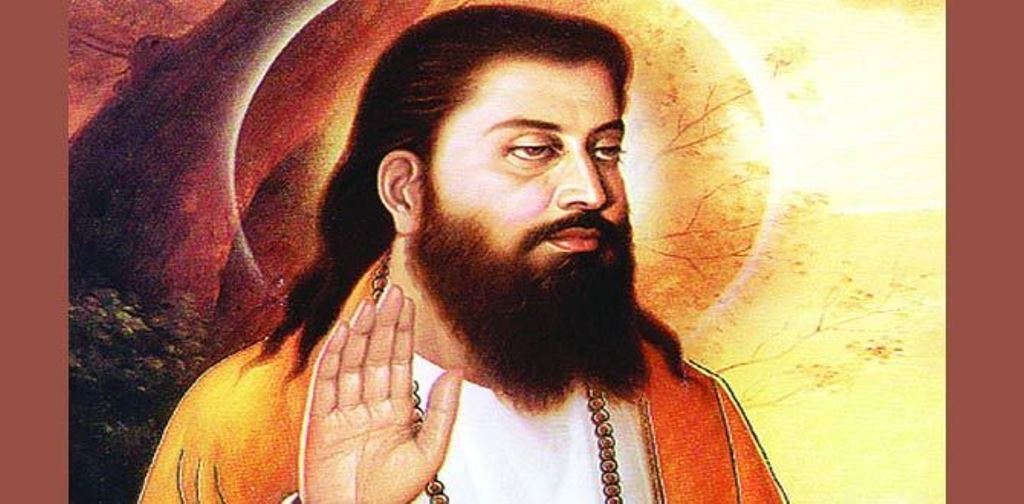
This 15th century temple located in a forested area has been dedicated to Sant Guru Ravidas, a spiritual saint and a poet highly revered by many people and especially Dalit communities in North India.
The legal case of the land was pending for 27 long years and the Supreme Court order tried to end the old dispute by declaring the land as belonging to DDA. This has now erupted in rage amongst the Dalit congregation who, along with the larger Ravidassia community in North India, have been on protests ever since that temple was demolished.
Dalits followers of Sant Guru Ravidas who claim ownership of the land where the temple stood are being asked to rebuild this temple on another plot. Dalits who are organised into ‘Ravidas Jayanti Samaroh Samiti’ (Ravidas Jayanthi Celebration committee) say that it is like suggesting the Hindus to build the Ram temple at a site other than Ram Janmabhoomi in Ayodhya, where some believe that Lord Ram has been born.
On 21st August, thousands of Dalits from Punjab, Haryana, Delhi, Rajasthan, Uttar Pradesh and other states staged protests against the demolition and the police resorted to lathi charge and tear gas shells. Nearly 90 leaders, including Bhim Army leader Chandrashekhar Azad, were detained by the police.
TwoCircles.net spoke to Pardeep Attri, a follower of the Sant Ravidas himself, to know more about the saint and why Dalits are agitated over this order of the SC and the subsequent demolition of the temple by the DDA.
Pardeep Attri, is also the founder editor of Velivada, a web publication and owner of the twitter handle Ambedkar Caravan.
- Can you tell us a little about who is Sant Guru Ravidas?
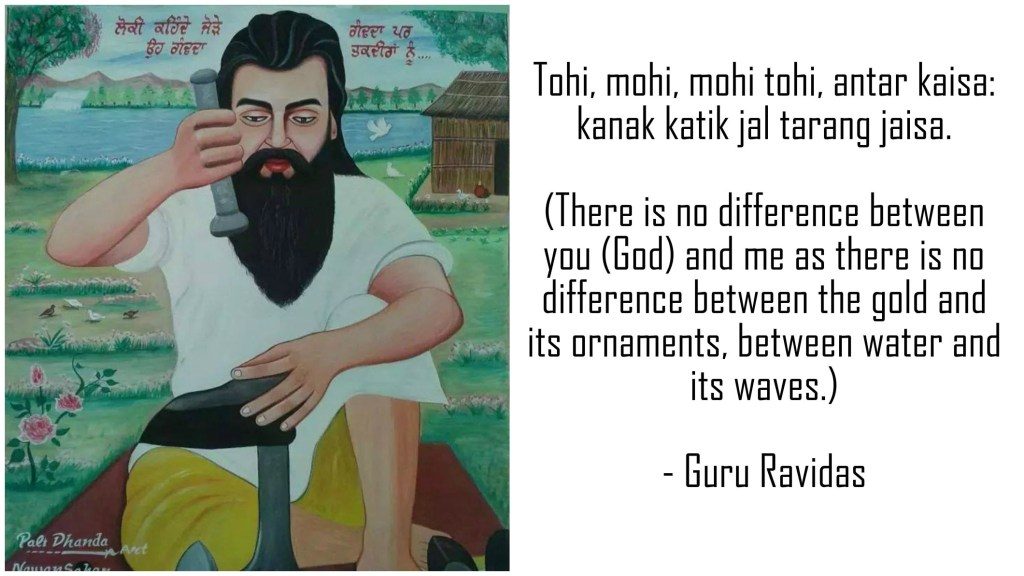
Pardeep: Guru Ravidas was born in 1433 at Varanasi, Uttar Pradesh in a Chamar family and travelled around preaching the value of humanity across India. He openly denounced all the Brahmanical scriptures like Vedas, Puranas, Smritis, Upanishads as these promoted the hegemony of Brahmins and justified the social inequality and exploitation of the masses.
As he says – “Charon ved kiya khandoti, Jan Ravidas kare dandoti” (I, Ravidas, proclaim all Vedas are worthless)
He threw a challenge to Brahmins of his time by worshipping God despite being from the untouchable community, which wasn’t allowed to read/write, forget worshipping God. He saw a dream of “Begumpura” (city without sorrow) almost 500 years before Martin Luther King’s ‘I have a dream’!
- Who are his followers, how many people belong to this sect (India and abroad)?
Pardeep: Followers of Guru Ravidas follow the newly established religion, Ravidassia, which came into existence when one of the religious teachers from Dera Sach Khand Ballan, Jalandhar, was murdered in Vienna, Austria, while he was on tour to Europe for preaching. Most of the followers are from the Dalit community from Northern Indian states such as Punjab, Delhi, Haryana, Uttar Pradesh, and Maharashtra in the center. So, if you want to put numbers on followers I would say 34% population of Punjab conspiring of Dalits is mostly follower of Guru Ravidas. There is a large followership of Guru Ravidas in Italy, Spain, Austria, UK, USA, Canada, Australia and Guru Ravidas temples have been built by followers around the world. There is even a road named after Ravidas in UK.
Babasaheb Ambedkar had dedicated the book, “Who were the untouchables” to Sant Ravidas, Chokhamela, and Nandanar.

- What according to you are the present day contributions of ravidassias ?
Pardeep: If Dalits from Punjab are conscious about their rights and gathered in thousands to protest against any atrocity that happens to Dalits in Punjab, credit one way or another goes to the fight launched by Guru Ravidas almost 600 years ago and his followers who kept the torch of struggle lit despite numerous challenges.
- Is it fair to say that a lot of Ravidassias come from the Dalit Community?
Pardeep: No, in fact, all of the Ravidassia come from Dalit community!
- How connected is the Ravidassia faith to the anti-caste movement.
Pardeep: I think I answered it in the above questions. But here is a bit more –
Founders and followers of Ad Dharm movement in Punjab subscribed to the philosophy of equality preached by Guru Ravidas. Later, it was Ad Dharm – a sect formed by the Dalits of Punjab, inspired by Guru Ravidas’s ideology, that started many schools for Dalit community in Punjab. They supported Dr Ambedkar throughout and when Gandhi was claiming to be a representative of the untouchable community during Round Table Conferences at the beginning of the 1930s, Ad Dharm leaders sent 100s of telegrams to the UK, letting the British authorities know that Dr Ambedkar is the real representative of the untouchable community. Babu Mangu Ram, the founder of Ad Dharm movement in Punjab, sat on a hunger strike against the hunger strike of Gandhi when Gandhi was opposing separate electorate awarded to untouchables.
Kanshi Ram belonged to the same Ravidassia community and everyone knows his fights for anti-caste movement!
Present-day Sach Khand Ballan Dera publishes a weekly magazine, operates various schools and hospitals for Dalits in Punjab. In a nutshell, you can say that the anti-caste movement in Punjab is led by the Ravidassia community.
- Can you comment on the on-going saffronization of Guru Ravidass and the faith itself?
Pardeep: It would take me hours to answer this question. But putting it very briefly, the so-called upper castes have been trying for decades to include Guru Ravidas in the list of their own numerous Gods. Many attempts – such as depicting Guru Ravidas on the foot of a cow, dressing Guru Ravidas in saffron garments, putting brahma-Vishnu

tilak on Guru Ravidas’s forehead, showing him as being blessed by some Hindu Gods etc. have been made. But Guru Ravidas was against all such customs.
A few years back, in the Punjab School Education Board’s books, the names of Guru Ravidas’ parents, his date of birth and even his name were wrongly published. Such mischief is being done by so-called upper castes to show Guru Ravidas was one of their Gods. Dalit academics from Punjab, especially, have been actively condemning the process of Brahminization of Guru Ravidas.
- What do you wish to say about the hurt sentiments surrounding the destruction of the Tuglakhabad Shri Guru Ravidass Temple?
Pardeep: More than sentiments hurt, I would say it is a matter of oppression and suppression of the Dalit community and denying them equality and justice. Sure, Guru Ravidas has millions of followers and they all have religious sentiments attached to religious places associated with their Guru. But the demolition of Ravidas temple is an attack on Dalit history and Dalit pride. It is believed Guru Ravidas had visited that place so sure there is a strong attachment to the place from Dalit community. I see it more as an inline to Brahminical forces’ whole agenda of destroying Dalit history. A few years ago, Siddhartha Bhavan in Mumbai, place where Dalit Panthers was founded, was demolished by BJP government; Dr Ambedkar’s belongings are in a miserable condition in Nagpur. All that the BJP/RSS Government wants is publicity in the name Dalit icons and Dalit votes while destroying the Dalit history.
- How do you think this parallels to the destruction of Babri Masjid for example.
Pardeep: I believe there is a strong relationship here, while millions of Hindu temples are built on illegal lands, obstructing normal traffic many times, no one has dared to touch those temples, temples which are built in the name of 33 crore fictitious gods. On the other hand, our historical places have been destroyed.
Destruction of Babri Masjid and Guru Ravidas temple are attempts to suppress Muslim and Dalit communities, both communities already have been side-lined and kept at the margin.
9.With Ravidassia using the same slogan ‘Mandir Wahin Banayenge’ as the BJP?RSS about Ram temple, do you see this a reclamation of the slogan in some way ?
Pardeep: Yes, it is the same rhetoric that RSS/BJP has been saying that why don’t Muslims build Masjid somewhere else and Dalits believe why can’t Ram Mandir be built somewhere? King Ram doesn’t have any historical proof but there is a long history of Guru Ravidas and the places he visited, Delhi’s temple is one such place. There has been a continuous attack on Dalits and minority communities and their religious places in India, take, for example, the Golden temple, Amritsar, was demolished, Babri Masjid was demolished, Sidharatha Bhavan in Mumbai (historical place for Dalits as Dalit Panthers was formed and operated from there) was demolished by BJP government and now Guru Ravidas temple has been demolished.
For other analogies, you can look into whenever there have been incidents of caste discrimination that some Dalit has been denied of cremation in common cremation places, many times what has been the solution of governments that build some separate cremation place, somewhere else so that so-called upper castes don’t get angry at the common cremation place. Why should there be separate cremation places for different caste groups?
Valmiki community protesting along with Ravidasiya community in Punjab against the demolition of Guru Ravidas temple in Delhi. https://t.co/TIZhB9Jyjg pic.twitter.com/hgeiVyPONu
— Ambedkar’s Caravan (@AmbedkarCaravan) August 13, 2019
I can’t recall at the moment exact incident but there has been a lot of cases that government/admin trying to pacify the situation by offering some other place to build a temple or toilet or cremation places. This is no equality and no justice. Further, Guru Ravidas temple is a historical place and it is an absurd argument to move historical place to somewhere else. What would be historical about that new place?
“Mandir Wahin Banayenge” slogan one could say is a clever appropriation of what so-called upper castes have been doing in their demand to build Ram Mandir. And more so uttered to bring attention to the issue of historical places can’t be moved from one place to another. It is also shouted because in one place when Hindus consider Dalits as part of Hinduism then deny their rights, what sense does that make? If Hindus are adamant on building Ram Mandir at the same place then Dalits are adamant that our Guru’s temple be built at the same place which is historical.

- How do you foresee this issue being politicised in the coming days.
Pardeep: I would not use the word politicised. What is there to politicise actually? The land was awarded to the temple and there are papers available. Or even if there are some papers missing, how many temples in India have proper papers? How many temples are built on public land? The answer would be in millions!
It is RSS/BJP controlled courts and the administration that is saying ‘don’t politicise the issue’. After killing 1000s and politicising the Babri Masjid issue for more than 3 decades, they are telling the Dalits don’t politicise the issue, which is simply absurd.
On the other hand, if Guru Ravidas temple is not rebuilt on the same location Dalits are firm to continue to fight against that ruling.
- What role has the international Ravidassia diaspora played in protesting the destruction of the temple?
Pardeep: There were protests in front of Indian embassies around the world on 21st August, from Austria to the UK to USA and Australia Ravidassia followers came out to support the cause.